
Introduction
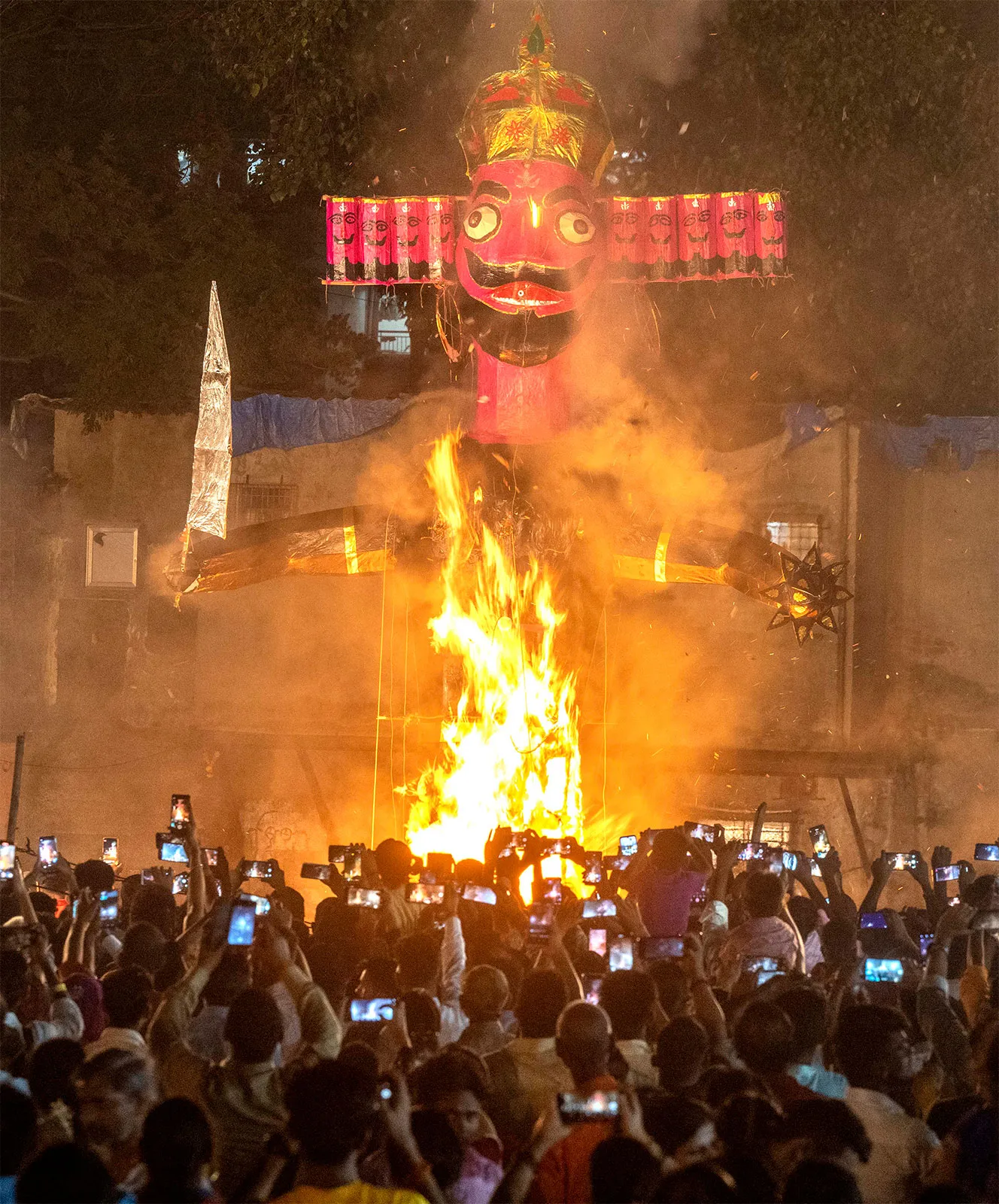
Dussehra (also called Vijayadashami or Dasara) is one of the most widely celebrated Hindu festivals in India, marking the victory of good over evil. It culminates the nine-day Navratri festival and is steeped in stories from the Ramayana as well as the worship of Goddess Durga. In 2025, Dussehra falls on Thursday, October 2.
This post explores the important timings (puja muhurat, tithi), rituals, regional customs, celebrations across India, and practical tips for devotees.
Key Timings & Panchang Details
To perform rituals properly, one must follow the auspicious windows as per the Hindu calendar (panchang). The following are the most commonly accepted timings for Dussehra 2025:
| Event | Timing / Period |
|---|---|
| Dashami Tithi begins | Oct 1, 2025 at ~ 7:01 PM |
| Dashami Tithi ends | Oct 2, 2025 at ~ 7:10 PM |
| Vijay Muhurat | 2:09 PM – 2:56 PM |
| Aparahna Puja Window | 1:21 PM – 3:44 PM |
| Shravana Nakshatra | Begins Oct 2, 9:13 AM to 9:34 AM (next day) |
| Ravana Dahan (burning effigies) | Evening Oct 2, around 6:05 PM (Pradosh Kaal) |
⚠️ Note: Different sources may give slightly shifted muhurats. It’s best to consult local panchang or temple priests in your area.
Also, Navratri 2025 starts on Monday, September 22 and ends on October 1, leading into Dussehra on October 2.
Significance & Mythological Background
Rama vs Ravana: Triumph of Dharma
In North and many central/western parts of India, Dussehra commemorates the day when Lord Rama, aided by Lakshmana and Hanuman, defeated the demon king Ravana and rescued Sita. The burning of Ravana’s effigy symbolizes the destruction of evil, ego, and adharma.
This theme of victory extends to the spiritual: overcoming inner vices, cultivating virtue, and re-establishing righteousness (dharma).
Goddess Durga & Mahishasura
In the eastern, northeastern, and some southern states, Dussehra is seen as the last day of Durga Puja, signifying Goddess Durga’s victory over the buffalo demon Mahishasura. Thus, Dussehra is also called Vijaya Dashami in honor of that triumph.
In those regions, idols of Durga and her children (Lakshmi, Saraswati, Ganesha, Kartikeya) are immersed in rivers or the sea (visarjan) with emotional ceremonies.
Symbolic & Social Meaning
- New Beginnings: Dussehra is considered auspicious to start new ventures, buy property or vehicles, begin studies, etc.
- Tools & Weapons Worship: In many places, tools, weapons, and vehicles are worshipped (Shastra Puja, Ayudha Puja) as a mark of respect and seeking protection.
- Cultural Unity: Through Ramlila dramas, fairs, community gatherings, and mythic storytelling, Dussehra unites diverse communities around shared values.
Rituals & Observances
Before the Day
- Sankalp and fasting: Many devotees fast or observe partial fasts, take vow (sankalp) for blessings.
- Cleaning & Purification: Homes and puja rooms are cleaned and decorated.
- Idol Preparation: In places with Durga idols, artisans create beautifully decorated statues ahead of time.
- Ramlila Rehearsals: Street plays depicting episodes from Ramayana are staged nightly during Navratri.
On the Day (Oct 2, 2025)
- Shastra Puja / Ayudha Puja
Tools, musical instruments, weapons, work-related items are worshipped in the morning hours before the Dashami Tithi ends. - Aparahna Puja & Vijay Muhurat
The period from around 1:21 PM to 3:44 PM is ideal for performing special pujas, offering prayers, and reciting mantras. Many people mark their important rituals during Vijay Muhurat (2:09 PM–2:56 PM) within this. - Seemollanghan / Seema Avalanghan
In some regions, devotees symbolically walk or cross the boundary of their village or home to show boldness and resolve. - Shami / Shami Tree Worship
Leaves of the Shami tree are exchanged as a sign of goodwill and prosperity (especially in Maharashtra). - Ravana Dahan / Effigy Burning
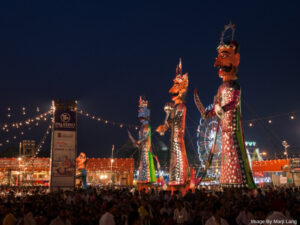
After sunset in Pradosh Kaal (around 6:05 PM), huge effigies of Ravana, Meghnad, and Kumbhakarna are set aflame in public gatherings, accompanied by fireworks and drama. This is the climax of Dussehra. - Visarjan / Immersion (in East & Northeast)
In places celebrating Durga Puja, idols are immersed in rivers or seas with fanfare, singing, dance and emotional farewells. - Feasting & Sharing Prasad
After the rituals, families share festive meals, distribute prasad (holy food), sweets, and sometimes gifts.
Regional Celebrations & Unique Traditions
India’s diversity means that Dussehra takes different forms across states:
North India & Central India
- Ramlila Plays: In cities like Delhi, Varanasi, Ayodhya, dramatic enactments of Ramayana are performed across many days.
- Effigy Burning: Large effigies are burnt in grounds and stadiums, often with large crowds and fireworks.
- Processions & Melas: Fairs (melas) accompany the celebrations, with stalls, cultural performances, and community feasting.
East & Northeast (West Bengal, Assam, Odisha, Tripura)
- Durga Puja Conclusion: Dussehra aligns with the immersion of Durga idols.
- Sindoor Khela: Married women apply vermilion to each other before immersion.
- Bhog & Prasad Distribution: In many temples, prasadam and community meals are distributed.
South India
- Vijayadashami & Saraswati Puja / Vidyarambham: In Karnataka, Tamil Nadu, Kerala, and Andhra Pradesh, children are ceremonially introduced to learning (Vidyarambham) and books are worshipped.
- Ayudha Puja: Tools, machinery, and vehicles are revered.
- Bonuses & New Beginnings: Many businesses begin the new financial cycle or start new machinery.
Special Festivals
- Kullu Dussehra (Himachal Pradesh)
A seven-day festival culminating on Vijayadashami, attracting 4–5 lakhs of visitors. It is celebrated as an International Mega Dussehra in Kullu Valley. - Bastar Dussehra (Chhattisgarh)
A unique festival tied to local tribal traditions focused on Goddess Danteshwari, with rituals, rath yatra, and cultural exchanges.
These regional variants keep the spirit of Dussehra alive in distinctive ways, combining mythology, local tradition, and community participation.
Tips for Devotees & Visitors
- Consult local panchang or priest for exact muhurat in your town — timings may shift slightly regionally.
- Arrive early at major venues for ramleelas or effigy burnings to get good seats.
- Traffic & security: In metropolitan areas, traffic diversions and tight security are common; plan your commute accordingly.
- Wear comfortable clothes: Traditional attire is best, but wear something suitable for walking and crowds.
- Stay safe at bonfires: Keep distance, follow safety guidelines, and avoid throwing things into the fire.
- Carry water & small snacks: For children or older relatives, in case events last whole evening.
- Respect environment: Use eco-friendly materials, avoid plastic waste, and ensure proper disposal of materials.
- Cultural sensitivity: In places where immersion takes place, avoid interfering in rituals.